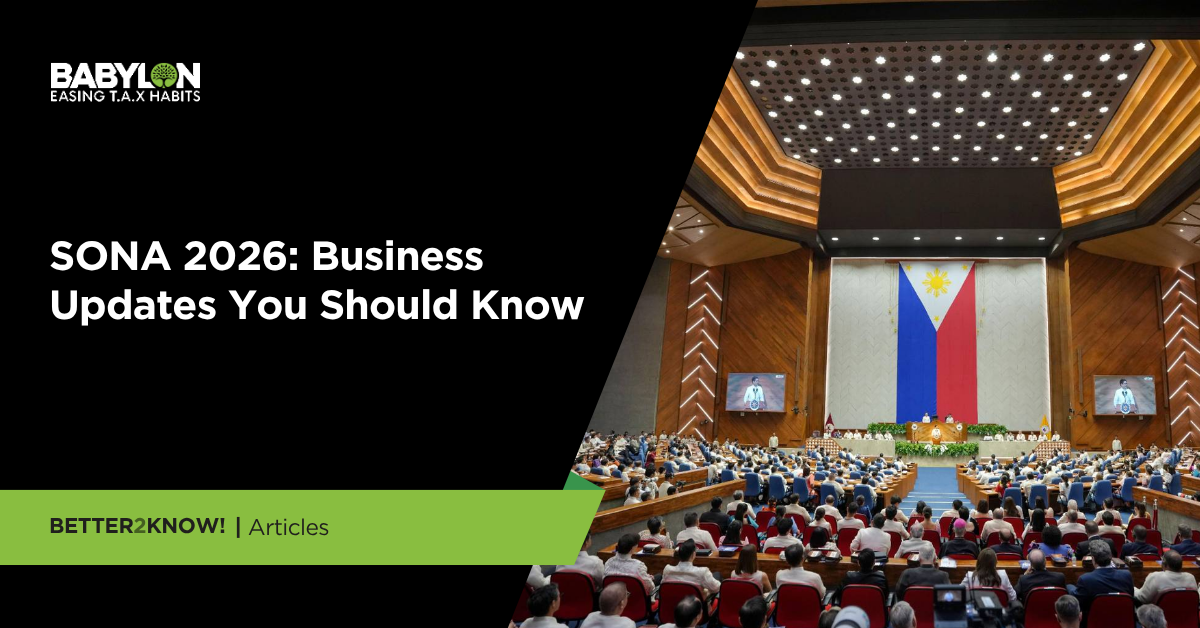
Every year, the State of the Nation Address (SONA) forecasts how the Philippine economy will take its next steps, and this year was indeed a notable one. With President Marcos Jr. delivering his 5th SONA last July 27, 2026, there are several agendas that surely have an impact on every Filipino business owner, whether they are a Micro, Small, and Medium Enterprise (MSME) or a big corporation. There are 3 areas that matter the most: a proposed revision of the personal and corporate tax system, heavy support toward the adoption of electric vehicles, and the boldest move to scrap system loss charges on electricity bills.
Here’s an in-depth take on each change that you should definitely be aware of.
Inside the SONA 2026 Business Updates: The Three Reforms
More Take-Home Pay for Taxpayers
The tax reform was indeed the headline on the economic pronouncements among the SONA 2026 business updates. President Marcos has urged Congress to increase the annual income tax exemption threshold from ₱250,000 to ₱350,000. According to the Department of Finance (DOF), it is estimated that the reform would benefit more than 3 million workers, including around 1.2 million who would be freed from paying income tax.
On the other hand, in the case of business owners, the more beneficial proposal is to exempt micro and small enterprises from the Minimum Corporate Income Tax, which is a flat 2% tax on gross income that applies regardless of whether a business is profitable. Furthermore, the DOF estimates that such relief would benefit around 78,000 micro and small businesses across the nation.
Several days after the SONA, the House of Representatives quickly responded by filing House Bill No. 10345 to formalize the 350,000 income tax exemption ceiling and restructure the graduated income tax table.
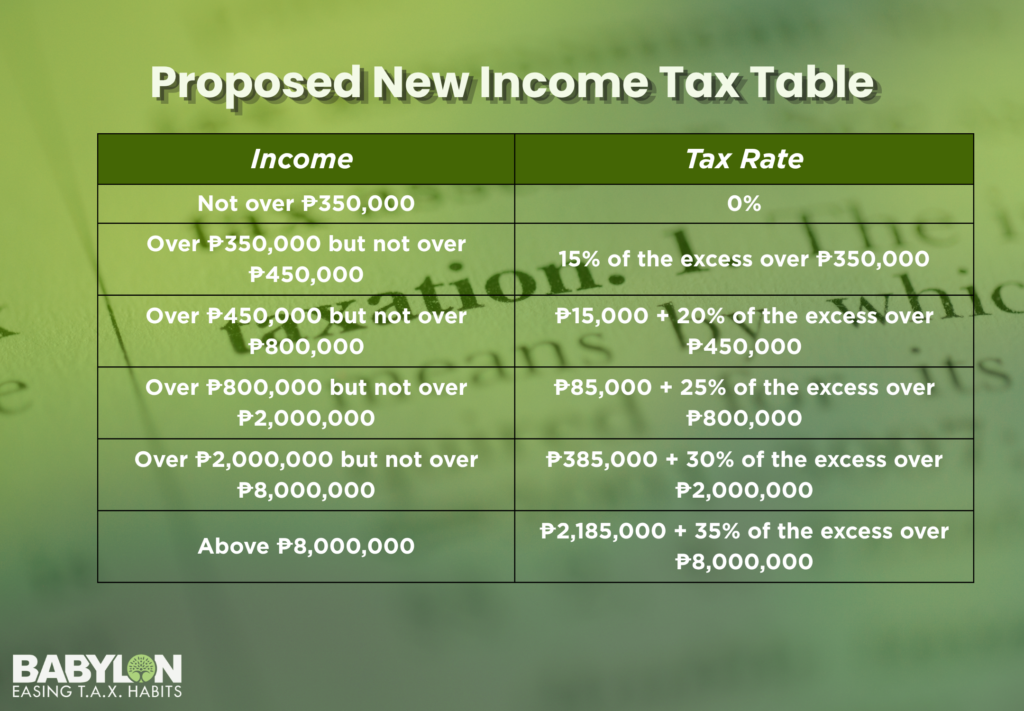
However, tax policy experts have warned that these proposals should be viewed only as a starting point. Chief Tax Advisor Mon Abrea emphasized that simplifying compliance and exempting MSMEs from MCIT are crucial for business operations and the creation of jobs. Moreover, tax relief should be matched by stronger revenue collection and improved enforcement against evaders, instead of just raising taxes on the part of compliant taxpayers.
In the present, the Bureau of Internal Revenue has already shown its preparation to implement whatever Congress has passed, highlighting its modernized systems and simplified compliance tools.
The Electric Vehicle Shift: A 2040 Target
Alongside the tax reform, a more forward-looking SONA 2026 business update was the President’s aim for electric vehicle (EV) adoption. Marcos has announced that the government will target to make electric vehicles become 50% of all vehicles that make up within the country by 2040, framing it as a movement towards a cleaner transport policy. In line with the shift, tariffs on EVs have already been suspended until 2028 to aid in bringing down prices for consumers and businesses.
Additionally, Marcos indicated that government offices and local government units have been also mandated to prioritize electric vehicles in their re-fleeting expenditure and he pointed out some real-world examples currently happening, such as the electric buses in Davao City, an electric ferry developed with the University of the Philippines and the Department of Science and Technology, and the plans for an all-electric Pasig River Ferry Service.
Consequently, the business groups have responded with cautious optimism. Some industry groups highlighted that there is a need for full implementation of the Electric Vehicle Industry Development Act (EVIDA), along with programs such as the Electric Vehicle Incentive Strategy (EVIS)—an estimated ₱60-billion incentive package aimed at growing local EVs. Also, some manufacturing groups have urged the government to extend the current tariff exemption on hybrids and battery EVs beyond 2028 to keep the transition much more affordable.
Scrapping the System Loss Charge
Indeed, the most applauded pronouncement during the SONA 2026 was the President’s call to remove the charges from electricity bills due to system loss. To define, system loss is the difference between what the electricity distribution utility receives and what is actually billed to consumers, which is a common gap caused by both technical inefficiencies in transmission and other losses such as electricity theft and illegal connections.
Under the Republic Act No. 9136 or the Electric Power Industry Reform Act, distribution utilities are allowed to pass a portion of such loss to consumers through their monthly bills, along with VAT on top of it.
President Marcos directly called this out during his address, emphasizing that consumers should not shoulder costs from a problem that is not their fault, and has subsequently demanded that Congress immediately amend EPIRA to prohibit the passing of system loss charges and its accompanied VAT. For context, a common system loss charge accounts for roughly 5% of a Meralco customer’s monthly bill.
Amidst the announcement, which drew a standing ovation in the session hall, the implementation cannot be immediate. According to the Department of Energy, they cannot provide a firm timeline yet but suggest that relief could arrive within the next year. More so, consumer groups noted that EPIRA amendments have been a recurring and unfulfilled promise in previous SONAs.
Things You Might Consider, For Now
The abovementioned pronouncements are indeed tempting, but can be classified as “wait and see” reforms. But smart businesses already know that policy direction, even before becoming an official law, can shape how the market behaves, how investor sentiments work, and do things with competitor strategy. Hence, each proposal can be interpreted as follows:
- Tax Reforms: influence how you plan your budget in the upcoming years
- EV Adoption: possible incentives and more relief programs that can reduce substantial costs
- Electricity Cost Relief: even if delayed or with no concrete timeline, it can still be a factor for long-term financial projections
More importantly, staying ahead of these business proposals means you won’t be left out when there are implementing rules and regulations, revenue issuance, or other government agencies’ updates.
Let Us Help You Navigate What’s Next
Policy proposals may move fast, likewise to their tax and compliance implications once they become an effective law. Here at Babylon2k, we help MSMEs and entrepreneurs cut through the noise and translate national policy shifts into practical business decisions.
Whether it is about reassessing your tax position regarding MCIT relief, planning for operational cost changes, or simply making sense of what these reforms could affect you—our team is ready to guide you.
Talk to Babylon2k today and get clarity on how the SONA 2026 could affect your business!
References
- BIR ‘ready’ to implement SONA tax-system overhaul – Business World
- Top House leaders file P350,000 tax-free income bill in response to Marcos’ SONA – Manila Bulletin
- Ask the Tax Whiz: What do the proposed tax reforms in Marcos’ 2026 SONA mean for you? – Rappler
- SONA 2026: Marcos eyes shift to electric public transport. – GMA New Online
- Business groups back SONA pronouncements. – Manila Times
- SONA 2026: Marcos wants system loss charges removed from power bills. – GMA News Online
- SONA 2026: Marcos Seeks EPIRA Amendment to Stop Passing Power System Loss Charges to Philippine Consumers. – Daily Tribune