Every time the Philippine peso weakens against the US dollar, the strain on Filipino consumers and businesses deepens. Fuel surcharges climb, import costs rise, and invoices swell; many business owners only feel the full impact later, when their cash flow statement tells a story no one wanted to read.
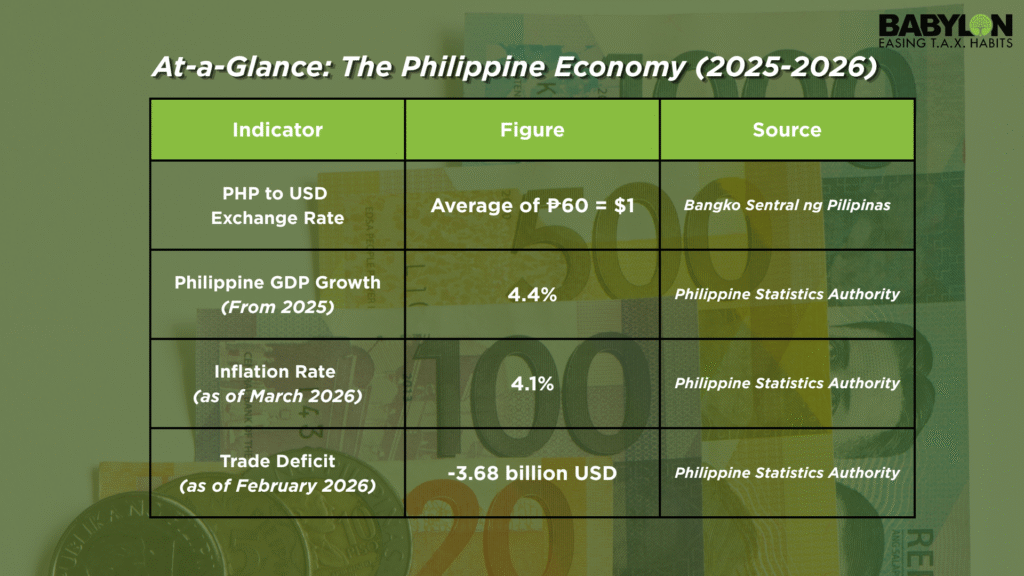
As of March 2026, the Philippine peso has breached the ₱60-per-dollar threshold for the first time in the country’s financial history.
For consumers, this means higher commodity prices. For entrepreneurs, the impact cuts deeper– touching procurement costs, loan repayments, pricing strategies, and overall purchasing power.
Why is the Peso Weak?
The Peso’s depreciation is not a temporary shock. Experts from the World Bank and the IMF have previously flagged the structural vulnerabilities behind it. Key drivers in 2025-2026 include:
- Widening Trade Deficit: The Philippine Statistics Authority (PSA)reported a trade deficit of $3.68 billion as of February 2026, driven by rising imports of electronics, fuel, agricultural products, and machinery.
- Dollar Strength: A stronger US economy, higher Federal Reserve interest rates, and global investor preference for dollar-denominated assets have put downward pressure on the peso.
- Weaker Business and Investor Confidence: Governance concerns – including corruption and delayed infrastructure projects – have dampened foreign investment in the country.
- Increasing Costs of Oil Imports: As a net oil importer, the Philippines must buy more dollars as energy prices rise, compounding supply chain disruptions across businesses and consumers alike.
- Geopolitical Tensions: Ongoing regional tensions, including the US-Israel-Iran war, continue to heighten oil price risks and pressure market currencies such as the Philippine peso.
How Peso Depreciation Affects Philippine Businesses
Like two sides of a coin, a weak Philippine peso creates both losers and winners. Knowing which side your business falls on is the first step toward building a resilient, profitable strategy.
Businesses That Lose
- Import-Reliant Businesses: Manufacturers and distributors sourcing raw materials, finished goods, or equipment abroad face directly higher costs.
- Companies with Dollar-Denominated Loans: Businesses that borrowed in U.S. Dollars now face heavier repayment burdens.
- Micro, Small, & Medium Enterprises: MSMEs that operate on tighter margins and have set pricing with clients are vulnerable, especially those with peso revenues but dollar-linked costs.
- Consumer-Facing Businesses: Restaurants, retailers, and travel businesses are in a double-edged situation, facing higher input costs and softening consumer demand as household budgets tighten.
Businesses That Can Gain
- Business Process Outsourcing (BPO) and Information Technology and Business Process Management (IT-BPM) Companies: Earning revenues in U.S. dollars and paying lower operating costs due to a weak peso can make BPO establishments more profitable.
- Export-Oriented Manufacturers: Philippine products become more competitively priced in international markets.
- Freelancers and Self-Employed Professionals: Those billing foreign clients in foreign currency receive larger peso payouts, increasing their income.
- OFW-Dependent Businesses: Establishments that serve communities that are reliant on overseas remittances benefit from increased local spending power.
Strategies to Navigate Weak Peso
Currency risk cannot be wished away — but it can be managed.
Here are some of the practical profit planning strategies:
- Conduct a Currency Exposure Audit: Every cost item and revenue stream affected by exchange rate movements, whether directly or indirectly, before attempting to manage the risk.
- Review Your Pricing Structure: Use stress-tested exchange rate scenarios to review your pricing. Consider adding a currency escalation clause to new contracts or building a 3-7% currency buffer into your rates.
- Explore Currency Hedging Instruments: Banks and financial institutions offer tools for MSMEs to access that can reduce uncertainty, such as Forward Contracts, Foreign Currency Accounts, and Cross-Currency Swaps.
- Localize Your Supply Chain: Shifting to local procurement where feasible reduces import dependence, shortens lead times, and minimizes currency exposure.
- Build Cash Flow & Forex Reserves: Tighten cash flow management and set aside a foreign currency reserve to absorb peso depreciation.
- Diversify Revenue Streams: Explore dollar-earning opportunities such as export sales, targeting international clients, or offshore freelance engagements.
- Consult a Financial Advisor or Expert: A qualified financial advisor or expert can help you navigate currency complexities. Additionally, monitoring Bangko Sentral ng Pilipinas’ decisions on rates and inflation data can help you stay ahead of emerging risks.
Pressure Creates Opportunity — If You Plan for It
The ₱60-per-dollar breach is a financial reality reshaping how Philippine businesses cost, pricing, and strategies. Depreciation may be inevitable, but businesses that understand their currency exposure clearly, adapt their operations, and hedge these risks intelligently can still thrive – and even find opportunity in pressure.
With Babylon2k’s team of experts, we can help you understand your risk and provide guidance to minimize it. Book a consultation now or send us a message today to gain control of your financial future.
References
World Bank – Growth Corridors: Pathways Out of Poverty
GMA News Online: How Filipinos are Affected by the Peso-Dollar Exchange Rate
Bloomberg – Why is the Philippine Peso so Weak and Who Benefits?
Ainvest – The Philippine Peso’s Decline: Trade Imbalances and Currency Vulnerability in 2025
Sugbo.ph: “Philippine Peso Slides to Record Low Amid Global Tensions”
National Accounts of the Philippines – PSA
International Merchandise Trade Statistics of the Philippines, February 2026 (Preliminary)