
“The numbers do not lie, but the people behind them can choose whether or not to tell the truth.”
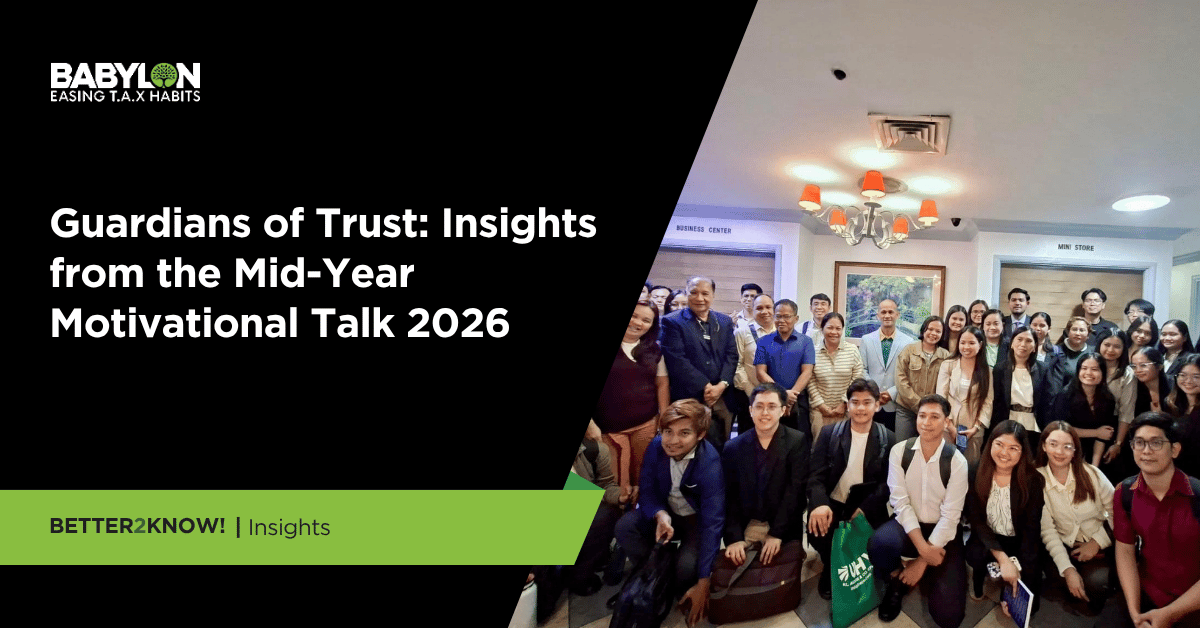
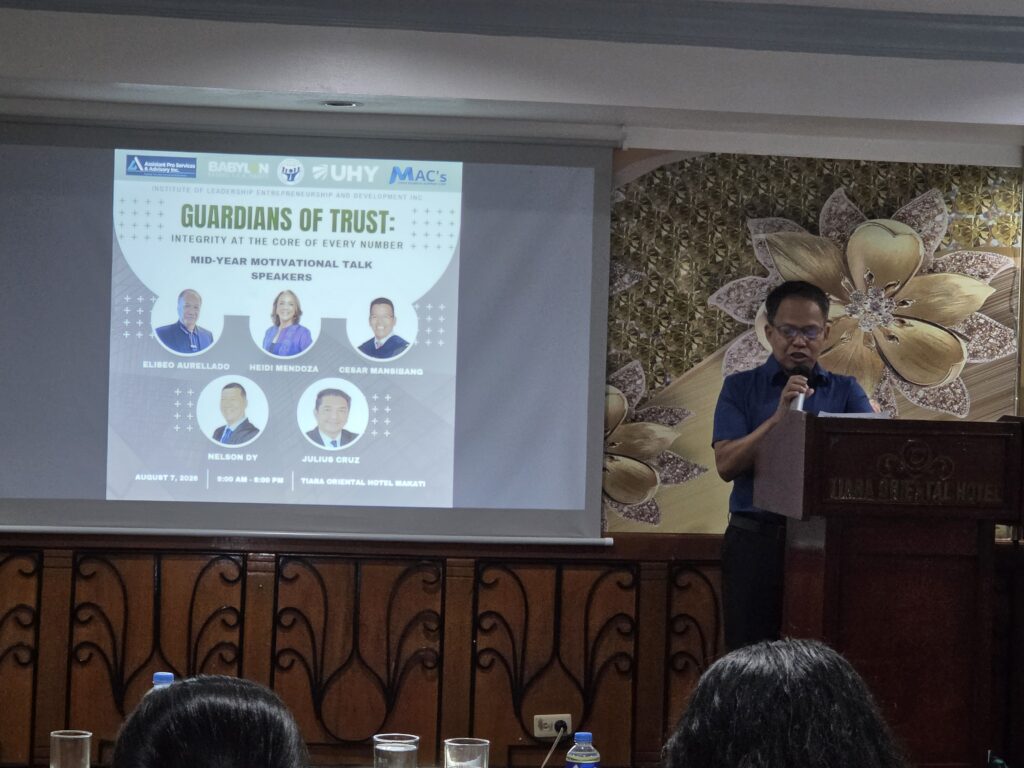
That is the quiet tension every accountant, auditor, tax expert, and business advisor faces every single day — and it is exactly what was tackled with Babylon2k’s esteemed partner, UHY M.L. Aguirre & Co., CPAs (UHYMAC), in its 19th Mid-Year Motivational Talk. It was held last August 7, 2026, at the Tiara Oriental Hotel Makati, via hybrid mode, having both online and on-site attendees.
With this year’s theme “Guardians of Trust: Integrity at the Core of Every Number”, it was not just a catchy tagline; it was rather a reminder of the accountability and responsibility that every financial consultant must bear at all times. Indeed, for nearly two decades of UHYMAC’s mid-year gathering, it was a form of recharging for its people ahead of the demanding tax or auditing season.
If you are a business owner or an entrepreneur who relies on your accountant, auditor, or tax advisor — this is definitely worthy to take your time.
Integrity is the Real Product
In the opening remarks of UHYMAC’s Founder and Managing Partner, Mr. Michael Aguirre, CPA, MBA, MST, he sets the tone by tracing the event’s 19 years of history and its role in reminding the team, both mentally and ethically, during the year’s busiest moments. His message was clear: as the firm approaches its 20th anniversary, differentiation does not come from having good software skills or doing tasks quickly—it comes from consistently upholding integrity, even when no one is checking.
A lesson that is truly worth sitting with if you are choosing who handles your records, your regulatory filings, or financial statements: While good systems and credentials matter, what makes them truly meaningful is the person behind them who makes sound, honest calls.
Ethical Dilemmas in Different Faces
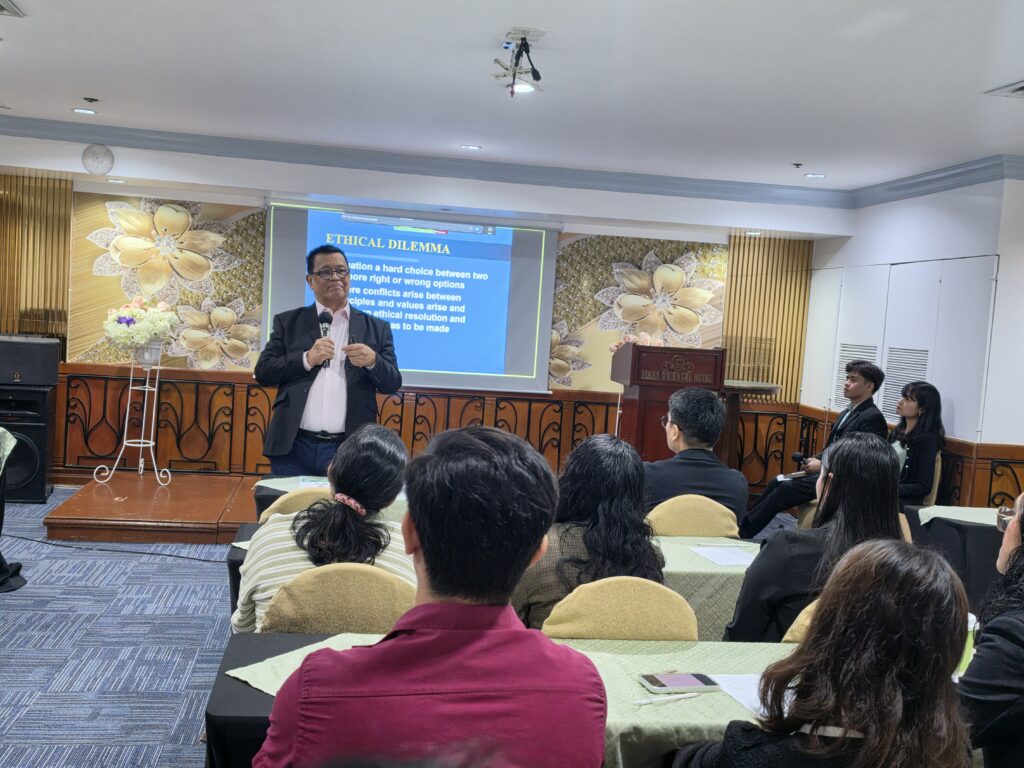
The morning session’s center topic is titled “Ethical Dilemmas & The Right Call,” presented by Dr. Cesar Mansibang, CPA, Ph.D., President of United Graphic Expression Corporation.
Dr. Mansibang discussed with the participants the real essence of ethical decision-making, a kind that rarely comes with an obvious right answer.
He framed it around four typical tensions accountants and auditors face constantly:
- Truth vs. Loyalty: telling a client an uncomfortable fact or protecting the relationship with them
- Individual vs. Community: contemplating stakeholders’ interests against the greater good
- Short-term vs. Long-term: an immediate quick win or choosing sustainable value for later times
- Justice vs. Mercy: applying the rule strictly or considering context first
His core lesson is that professionals should aim to be conscience-driven, and not just be compliance-directed. He emphasized that following rules is just the floor, not the ceiling.
Culture is Audited Too, Not Just the Numbers
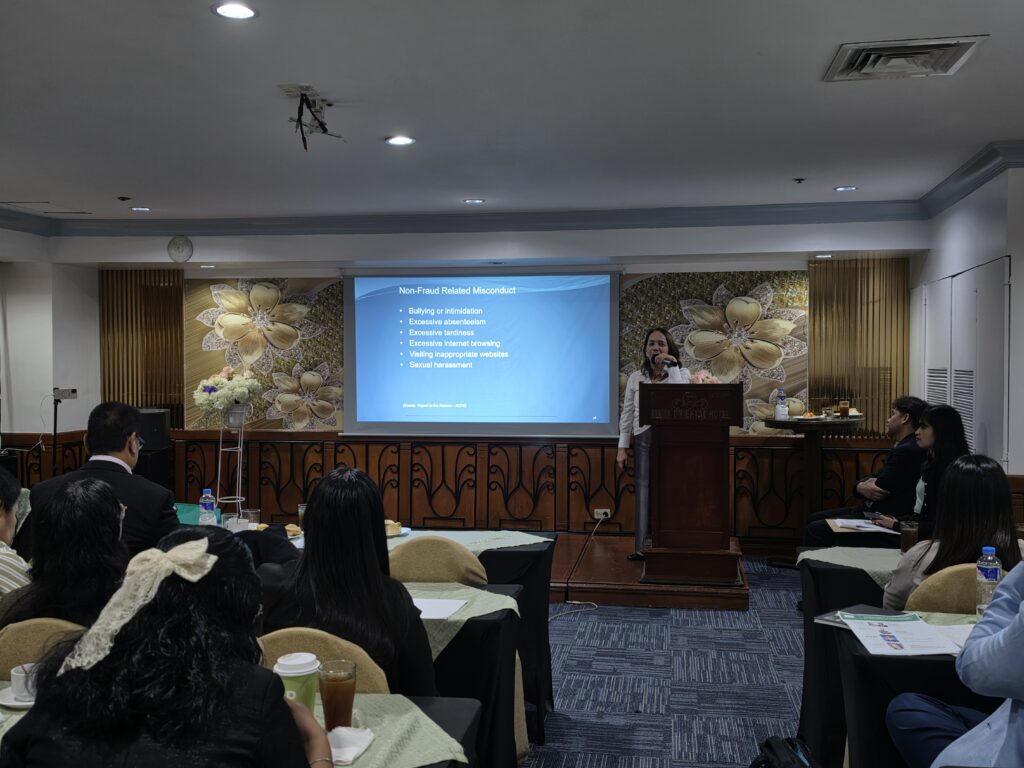
Next, a presentation by Heidi Mendoza, CPA, was held, themed as “Auditing Ethical Culture: Ethical Considerations Brought About by Transformations in Audit,” a former Commissioner of the Commission on Audit and former United Nations Assistant Secretary-General. Commissioner Mendoza pushed the discussion beyond individual ethics and put heavy focus on organizational culture. She argued that a company’s real risk exposure often lives in its unspoken norms, not just in its policy manual.
It can be viewed as a useful mirror. Simply, a toxic workplace signals poor work-life balance among its employees, chronic absenteeism, or a “position at the top” that deliberately and quietly tolerates shortcuts are some of the early warning signs of larger compliance and fraudulent risk in the environment. Thus, a healthy internal norm is not a soft Human Resources concern, as it is indeed a part of financial risk management.
Communicating Trust, Not Just Compliance
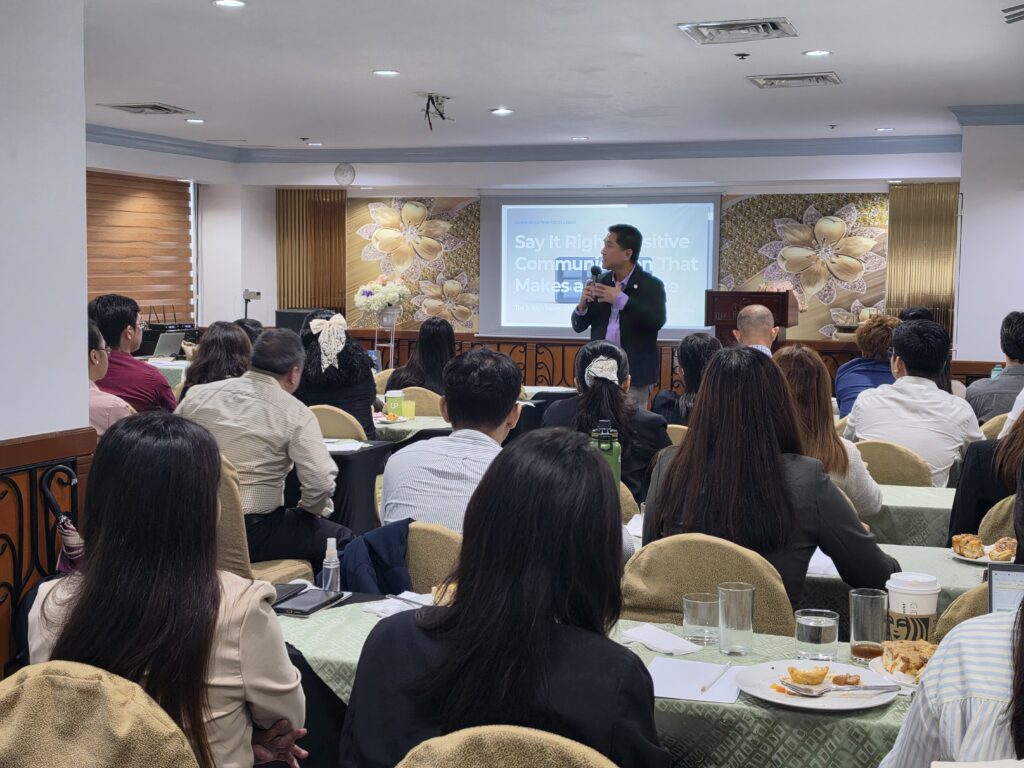
By the afternoon, Mr. Julius Cruz, a Maxwell Leadership Team Coach, Speaker, Trainer & Distinguished Toastmaster, opened the conversation about “Say It Right: Positive Communication That Makes a Difference.” His focus was on how professionals build trust and connection across generations through clarity, consistency, and relationship-first communication, rather than leading with correction or speaking about things in compliance.
Definitely, an accountant who can explain a tax exposure or an audit finding clearly and concisely, simplifying technicalities and exercising professional judgment, is doing more for a business than one who simply hands you a report.
Sustaining the People Behind the Numbers
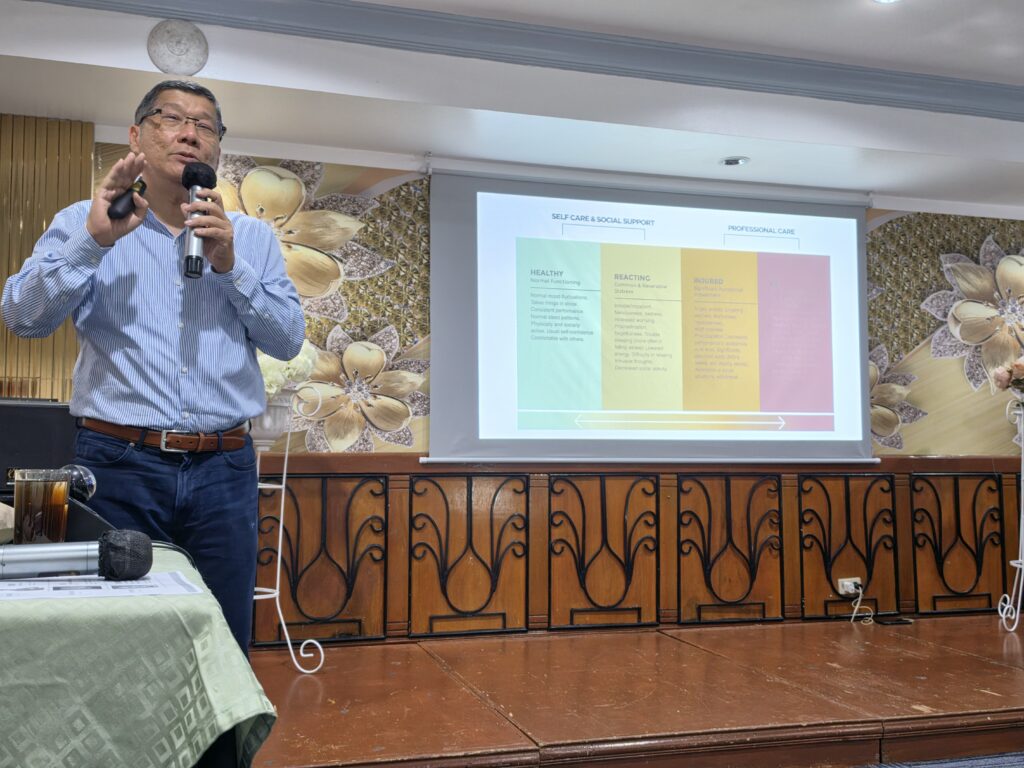
Nelson Dy, an Executive Coach, L&D Trainer, Published Author & Public Speaker, followed with his presentation, “Mind, Momentum, and Mission: Sustaining Performance through Mental Wellness and Integrity.”He introduced a four-wheel framework: biological, psychological, social, and spiritual, implying that mental health is treated as a continuum—not just a switch that could be turned on or off. Moreover, he highlighted practical strategies for maintaining well-being, such as proper breathing, daily movement, adequate sleep, and reframing negative self-talk into constructive action.
Thus, it is a good reminder that ethical and high-quality work does not come from burned-out people. Firms that invest in their team’s well-being are investing in the reliability of the services you receive.
Closing the Day: The Value of Values
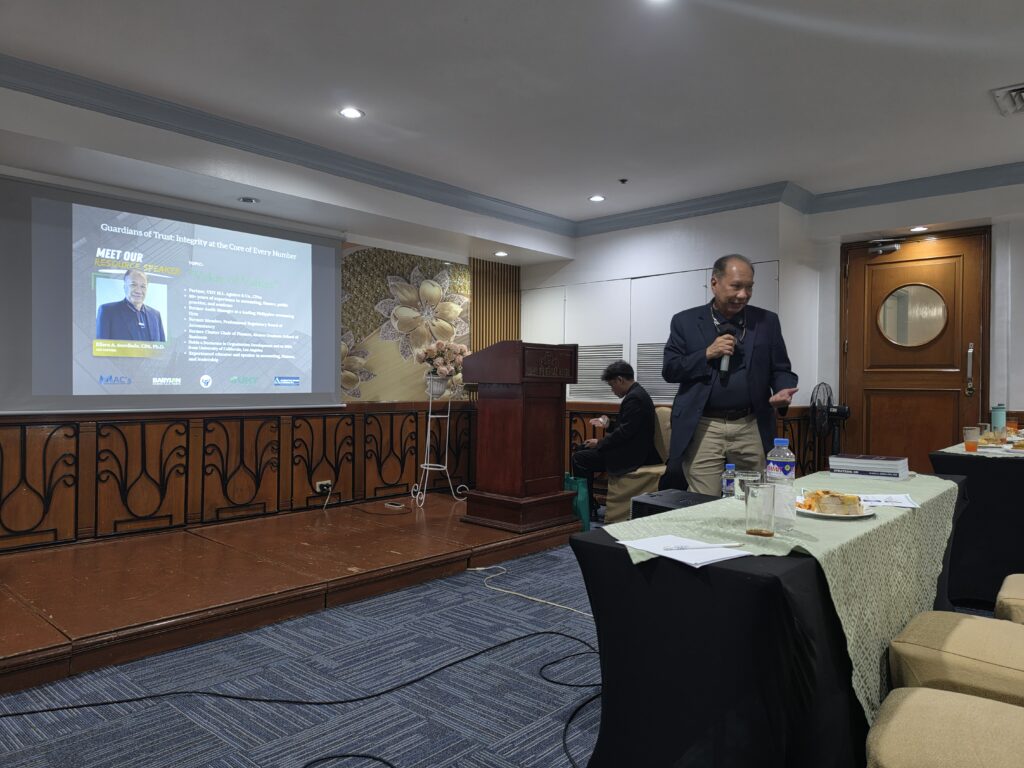
As the program reached its conclusion, Dr. Eliseo Aurellado, CPA, a partner of UHYMAC, followed with his discussion of “Value of Values”, along with an open question-and-answer session. His session brought the day into its overall meaning—inviting participants to reflect on what truly makes a professional and a person valuable, and how principles such as perseverance, gratitude, and courage are implicated in every decision.
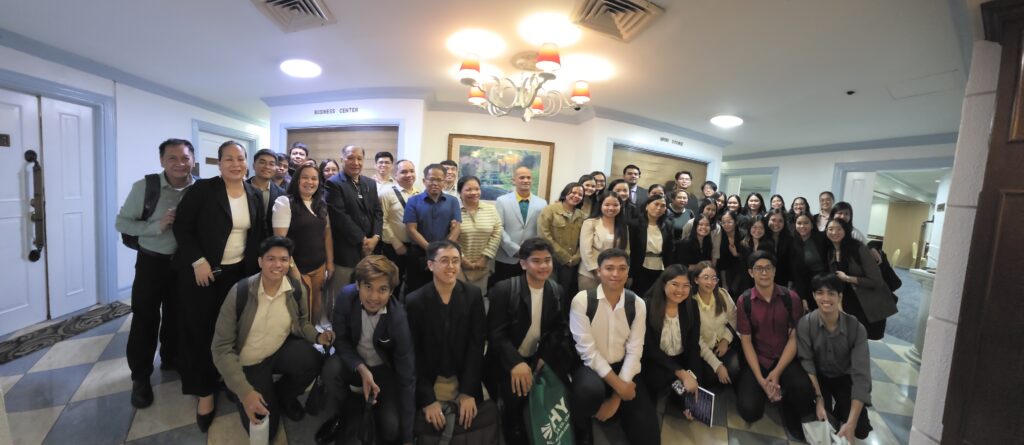
Lastly, Mr. Ruel Facundo, CPA, also a UHYMAC partner, delivered the closing remarks. He highlighted integrity as the throughline of the entire talk and the very foundation that the firm carries into tax or audit season.
The Takeaway
Indeed, events like this rarely make it through the headlines, but they say a lot about how a company operates behind. As an accounting firm intentionally pauses to invest in a full day of ethics, culture, and communication—it signals that the numbers you receive are only as trustworthy as the people who produce them.
That’s why the next time you are choosing an accountant, auditor, or tax consultant, it is worth asking not only if they are competent, but also “are they conscience-driven?”, as the distinction lies in where the real trust is built.