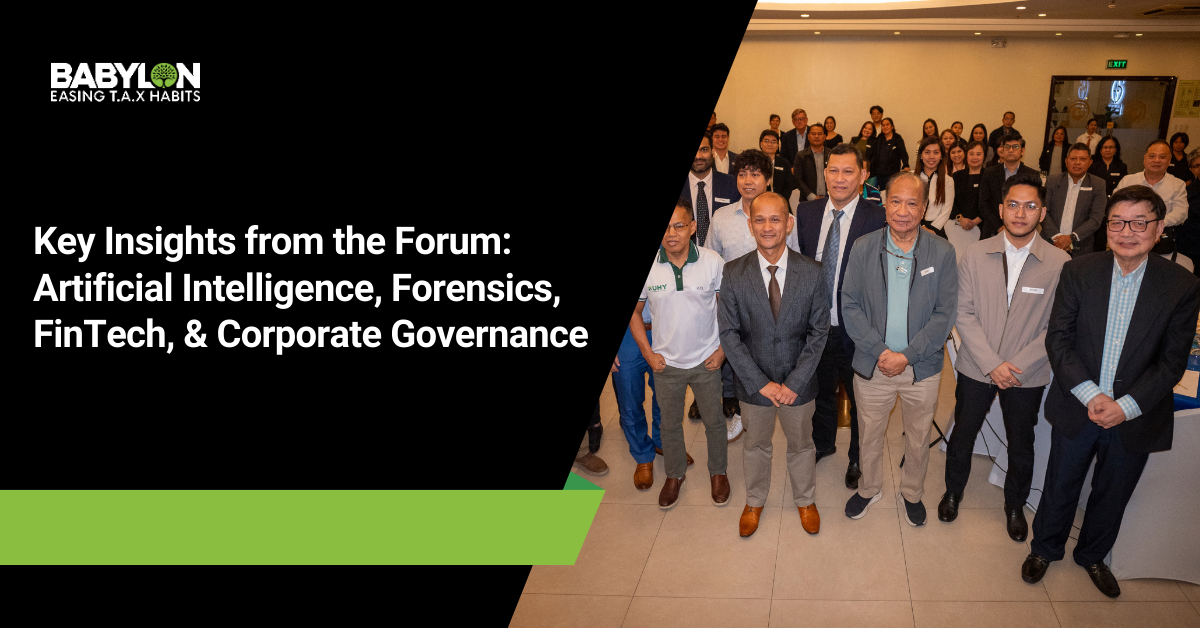
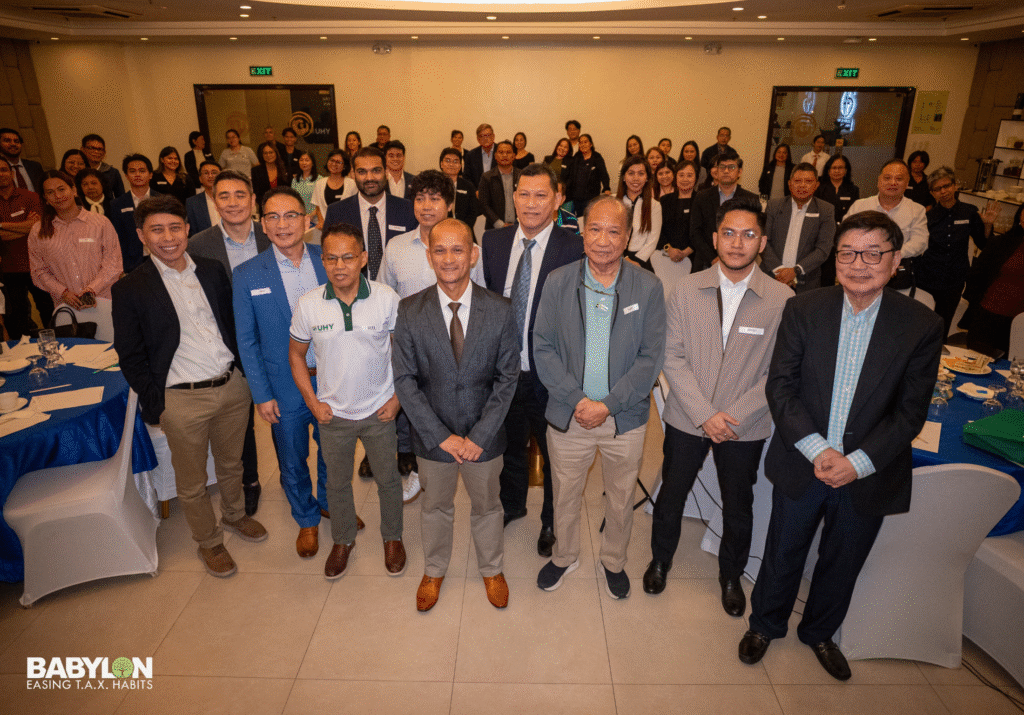
Last March 6, 2026, industry leaders, finance professionals, technologists, and governance experts from other regions gathered at the Golden Phoenix Hotel Manila for the forum “Artificial Intelligence, Forensics, FinTech, & Corporate Governance”.
The event was partnered by Babylon2k and its trusted partner, UHY M.L. Aguirre & Co., CPAs, that brought together over 200 participants both onsite and online — aimed at exploring how emerging technologies change the way of shifting for auditing, financial systems, cybersecurity, and governance frameworks.
Indeed, the fundamental question of the forum was focused on the critical concern nowadays: How can organizations harness or adopt AI and such emerging technologies while simultaneously protecting trust, transparency, and security?”
The answer lies in the key insights from the reputable speakers of the forum.
Adapting to Digital Innovation in the Philippines

Donald Lim on the Urgency of Digital Transformation
The forum began with its distinguished keynote speaker, Dr. Donald Patrick Lim, the President and Chief Operations Officer of DITO CME Holdings Corporation, discussing the Philippines’ digital future and the opportunities given by the emerging technologies.
He highlighted that the country has the potential to become one of the top 20 economies by 2040, yet this vision will heavily depend on how institutions and businesses adapt to technological advancements.
Dr. Lim emphasized 3 key technological factors that will shape the next decade:
- Artificial Intelligence
- Blockchain
- Cybersecurity
Also, according to Dr. Lim, organizations that fail to integrate these technologies are exposed to the risk of falling behind in a fast-paced digital economy. He shared some examples of initiatives aimed at improving transparency and trust — including an AI governance program and a blockchain-based movement called “Integrity Chain”, designed to enhance transparency in government budgeting.
Nevertheless, he also noted that technological advancements must be accompanied by strong digital infrastructure and cybersecurity readiness. Despite being one of the most digitally active countries in Southeast Asia — the Philippines is still subject to vulnerability in terms of cyber threats.
On his final note, another crucial issue was raised, pertinent to education and workforce readiness. As AI and automation reshape industries, preparing the next generation with the proper digital literacy and critical thinking skills will be fundamental in sustaining the nation’s competitiveness.
Digital Trends and the Rise of Forensic Investigations

Sarang Dalal on AI-Driven Fraud Detection
The first session shifted the focus towards forensic audits and financial investigations, with Sarang Dalal, Director of Chetan Dalal Investigation & Management Services (Singapore), how digital transformation is changing fraud detection.
Sarang began by comparing traditional audits with forensic audits, wherein the conventional audits typically assess financial accuracy and compliance, while forensic audits tend to focus much more on the investigation of suspected fraud, uncovering manipulation, and gathering evidence for potential litigation proceedings.
Moreover, using real-world case studies, Sarang demonstrated how investigative techniques reveal financial problems that would go unnoticed if ignored. A key illustration was the involvement of a suspected mall robbery, which turned out to be a scheme designed to siphon funds. Additionally, another case examined a £1.4 million insurance claim in Sri Lanka, where behavioral red flags raised suspicions of potential fraud.
Another key theme in Sarang’s session was the increasing role and functionality of AI-assisted investigative tools, such as technologies involving Benford’s Law analysis and the Relative Size Factor (RSF) — a tool that enables auditors to identify irregular transaction patterns within massive financial data sets. Such analytical processes allow investigators to detect even the subtle statistical anomalies, which often serve as a signal of manipulated financial data or fraudulent transactions.
On his final note, Sarang highlighted that as financial systems thrive and gradually become more digital, forensic methodologies must also advance alongside emerging technologies via integration of AI-driven analytics to strengthen fraud prevention and better investigation accuracy.
Quantum Cryptography
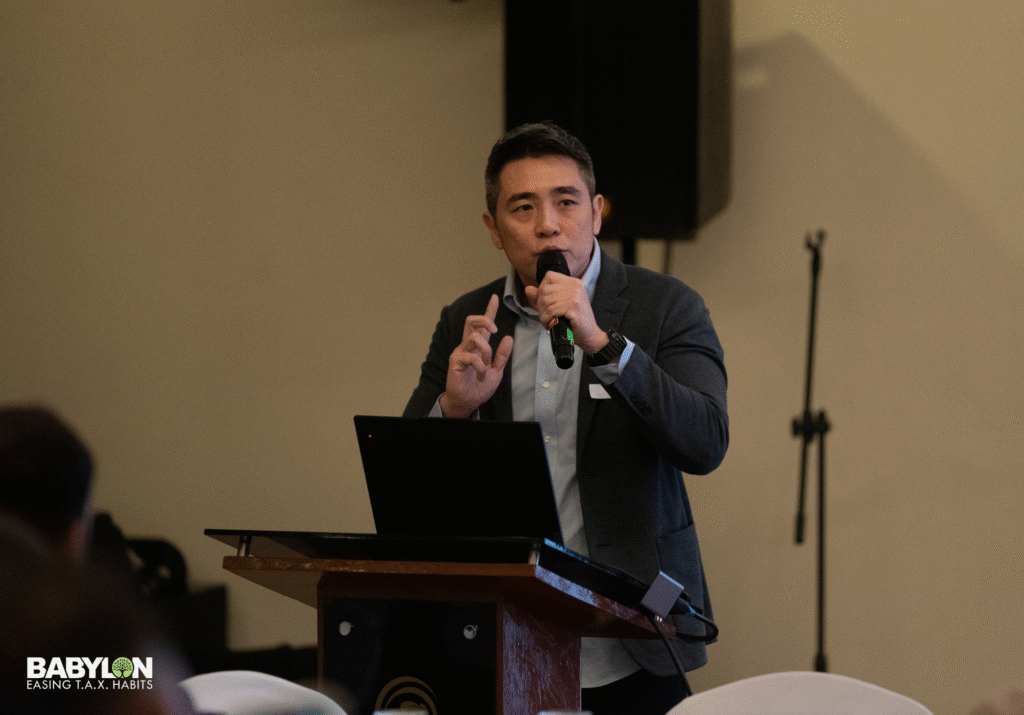
Wo Swee Teck on Preparing for the Post-Quantum Era
Meanwhile, as most organizations are focused on current cybersecurity challenges, Wo Swee Teck, Director of Securemetric Technology, urged companies to prepare for the long-term technological disruption: Quantum Computing
Quantum computers, once fully realized, could potentially break the widely used encryption standards such as Rivest-Shamir-Adleman (RSA) and Elliptic Curve Cryptography (ECC), with advanced algorithms like Shor’s Algorithm. Such capability would truly expose to risks the security foundations of modern banking, financial infrastructure, and digital communications.
To address this upcoming risk, Wo introduced the idea of Post-Quantum Cryptography (PQC), wherein a new generation of encryption algorithms is designed to withstand the threats posed by quantum computing attacks.
Wo emphasized that organizations must begin developing crypto agility, an ability to rapidly update cryptographic systems as security standards grow. He added that several countries in the ASEAN region are already taking steps, such as Singapore and Malaysia, in which they have begun implementing PQC preparation frameworks and doing Cryptographic Bill of Materials (C-BOM) exercises to assess the current cryptographic dependencies.
His message to financial institutions and enterprises was clear: quantum disruption may not happen tomorrow, but preparation must begin today.
Cybersecurity Strategies for SMEs

Jeffrey Serrano on the Expanding Mobile Threat Landscape
The Lead Security Architect of Securemetric Technology, Jeffrey Serrano, addressed the rising digital threat landscape, specifically for small and medium enterprises (SMEs) that lack advanced security infrastructure.
Serrano emphasized how cybercriminals increasingly exploit mobile platforms and applications, making it the reason behind significant financial losses across countries in Southeast Asia.
Some of the common attack methods include:
- Malware integrated into mobile apps
- Application exploitation
- Identity spoofing using AI-generated content
He showcased how readily available AI tools can be used to replicate voices or identities — making fraudulent schemes much more convincing.
Serrano stressed that AI is now being used by both attackers and defenders. Malicious actors use AI to automate scams, and security teams can also use AI to monitor network activity and detect anomalies in real time.
Further, he warned organizations against blindly trusting AI systems, as their outputs must always be validated and monitored, especially when dealing with sensitive financial or operational information.
Serrano concluded his talk by highlighting the importance of digital responsibility and cybersecurity awareness, as younger generations have increased interactions with AI technologies.
Strengthening AI Governance and Corporate Accountability

Atty. Eric Javeloza and Concordio Quisaot on Responsible AI Use
As the session moved forward, it turned towards corporate governance and legal accountability in the age of AI.
One of the speakers, Atty. Eric Javeloza, the Junior Partner of Somera, Javeloza, & Associates, outlined the key responsibilities of corporate secretaries in ensuring compliance, transparency, and proper governance structures. He stressed how governance roles must also evolve as their organizations adopt AI-driven processes and digital decision-making systems.
According to Atty. Javeloza, strong governance frameworks help organizations manage risks associated with emerging technologies while simultaneously maintaining regulatory compliance.
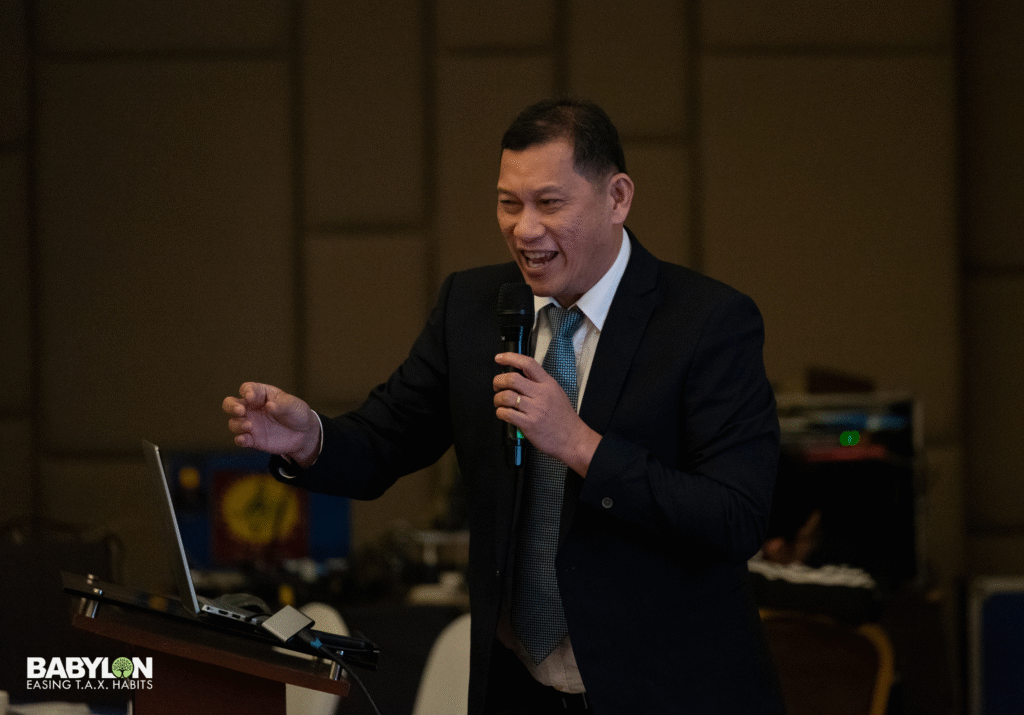
Concordio Quisaot, CPA, Former Professional Regulation Commission – Board of Accountancy member and Senior Partner of Quisaot, Tan, Gabales, Sagales and Associates, expanded the session by discussing the growing role of AI in financial systems and corporate operations. He highlighted that effective AI deployment requires trust, education, and security. He demonstrated how non-programmers can already leverage AI tools to ease business tasks such as:
- Policy compliance verification
- Financial statement analysis
- Automated meeting transcription
Nonetheless, he highlighted that responsible implementation must always be accompanied by innovation. Organizations must first understand how AI systems work, what risks they are exposed to, and how they should be aligned with regulatory and ethical standards.
Altogether, their message reinforced a central theme: AI adoption must be supported by governance structures that prioritize transparency, accountability, and security.
AI Integration and the Future of Enterprise Systems

Kernan Butalid Motoomul on Moving Beyond Excel
As businesses navigate AI integration, Kernan Butalid Motoomul, Founder and Chief Executive Officer of TECHSUPPORT, IMPEXTIC, & ONEOFFICE, highlighted a common limitation within many companies: reliance on fragmented tools such as Spreadsheets or Excel.
Motoomul explained that while AI is capable of automation, such as summarization, analysis, and even creative outputs — it cannot replace human judgment and strategic decision-making.
Indeed, AI should be viewed as a support system that enhances a business process. He emphasized the need for organizations to transition from isolated data tools and adopt integrated enterprise systems, where AI can analyze structured data in real time and provide predictive insights, operational efficiencies, and data-driven decision-making.
In conclusion, Motoomul predicted that the next phase of advancements will involve AI-enhanced enterprise platforms, capable of delivering insights for decision-makers.
Building an Effective AI Implementation Framework

Larry Tan on Turning AI Strategy into Action
To close the forum, Larry Tan, CCXP, the Chief Product Officer of Alltitude Advisory (Singapore), provided a practical roadmap for organizations that aim to implement AI successfully.
He described AI as a powerful “intern”, capable of performing numerous tasks quickly, but still requires human guidance.
Consequently, Larry introduced a structured AI implementation framework, highlighting that organizations must have a clear definition first of their workflows and business objectives before deploying AI systems.
The key success factors he noted include:
- Clean and structured data
- Clear operational goals
- Integration with existing enterprise systems
- Leadership commitment to AI adoption
Apart from this, Larry showcased real-world AI applications such as HOPE, an AI co-pilot assisting medical clinic appointments and patient triage, and SIRA, an AI-powered chatbot capable of handling insurance inquiries and generating quotes.
Also, he emphasized the importance of on-premise AI deployment for sensitive data, ensuring first such security and regulatory compliance.
Ultimately, Larry stressed that effective AI adoption is just about adding AI to existing processes, but optimizing or restructuring workflows so that AI can enhance productivity and decision-making effectively across different companies.
The Road Ahead
The forum on Artificial Intelligence, Forensics, FinTech & Corporate Governance made one message crystal-clear: that technology alone is not enough. For an organization to further thrive and have a better positioning in the digital era, innovation must be accompanied by:
- Strong governance
- Robust cybersecurity
- Transparent financial systems
- Responsible AI implementation
As AI continues to transform multiple industries, businesses that are proactively addressing these challenges will have a stronger stance in unlocking their full potential in the current phase of digital innovation.
If your organization is exploring AI integration, digital transformation strategies, or governance frameworks for emerging technologies, Babylon2K can help you move forward with clarity and confidence.
Connect with us and let us start together building a smarter, more secure, and future-ready organization!