A Growing Financial Risk that Businesses Cannot Ignore
Over the years, the Philippines has been known for its exposure to numerous natural disasters. Yet, a recent study from Fitch Ratings emphasized a more complex problem: climate-related risks are now becoming a related financial and credit concern for the country’s economy.
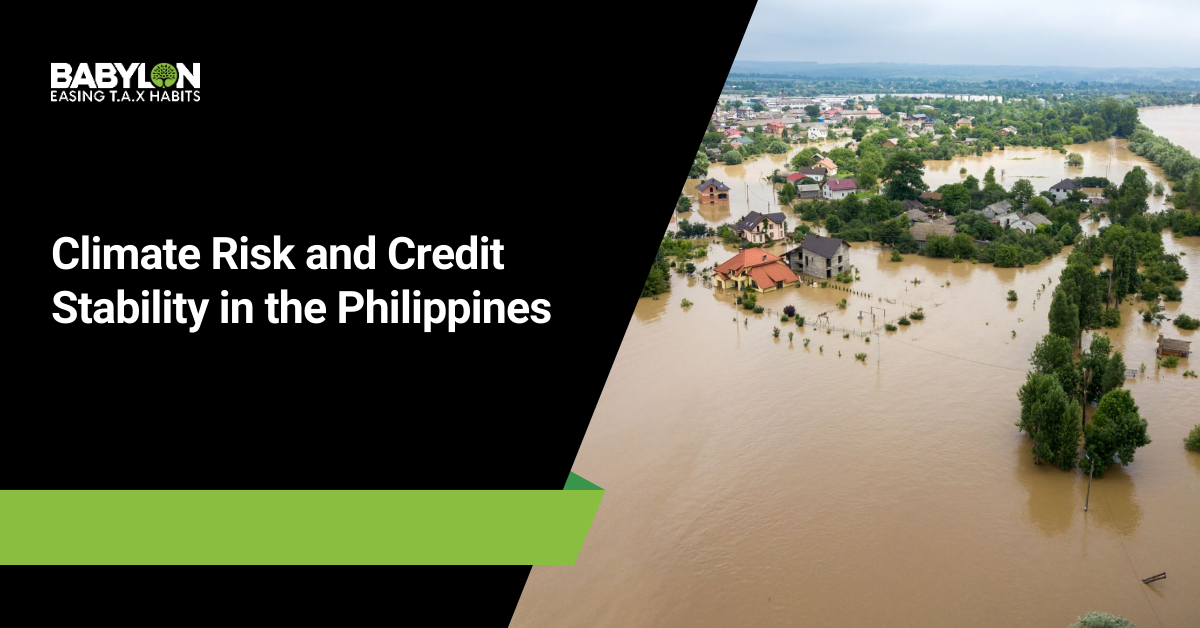
According to Fitch Ratings, a global credit-rating agency — the Philippines is currently ranking as one of the countries that are most exposed to climate-related risks by the year 2050. More devastating storms, flooding, and climate disruptions are not only considered environmental issues, but they also form part of the economic and financial risks that could influence the national credit ratings, fiscal stability, and operations of businesses.
Indeed, as emphasized in our article in relation to Sustainability Disclosures in Financial Reporting — for organizations that are operating in the Philippines, this is a sign of a critical shift that is about to happen:
“Climate resilience is not just a sustainability problem, it is also a financial and governance priority.”
The Question: How Climate Risks Affect Economic and Fiscal Stability?
Extreme weather events are anticipated to impact the Philippine economy in several ways:
Firstly, stronger typhoons and devastating floods can damage infrastructure, such as homes and business facilities. These damages slow down economic activities and can have an impact on how supply chains work, how operations are done, and the productivity of the workforce.
Secondly, recovery from disastrous events tends to have a significant pressure on government budgets. Some of the primary reasons are that there is a need for reconstruction costs, emergency aid — which increases the public spending, ultimately contributing to much more fiscal deficits.
Lastly, disasters can affect the work of crucial industries, such as agriculture and other related livelihood resources. Crop damages and staple food production losses may lead to rising food prices and even inflation, fostering additional pressure both in the private and public sectors of the economy.
According to the Philippine Atmospheric, Geophysical, and Astronomical Services Administration (PAG-ASA), the country experiences an average of 20 tropical storms annually, emphasizing that there is a need for public and private sectors to manage risks accordingly and have a strategic plan to mitigate these.
Climate Vulnerability and Sovereign Credit Ratings
The Fitch Ratings evaluated the exposure of 119 countries regarding climate-related risks between the years 2030 and 2050. Based on the results of its Climate Vulnerability Signals assessment, the Philippines received a physical risk score of 55 out of 100 — an indication of a relatively high vulnerability to climate impacts such as storms, flooding, and rising sea levels.
Moreover, in sovereign credit assessments, a score above certain thresholds may influence the likelihood of a credit-rating downgrade if such climate-related risks intensify.
Currently, the Philippines holds a “BBB” long-term foreign currency issuer default rating, meaning that we have a good credit rating quality, low expectation of default risks, and can remain stable for the short-term. However, continuous climate risks could impact the financial performance and economic resilience over the long run.
Hence, on the part of businesses and investors, this highlights the importance of monitoring climate-related risks as part of an organization’s financial and strategic planning.
The Business Impact: Why Companies Should Pay Attention
As sovereign credit ratings are distant from the usual day-to-day operations of businesses, climate-related financial risks eventually have a direct effect on the private sector.
Some of the challenges that companies may face are:
- Operational disruptions caused by extreme weather events
- Increased insurance and compliance costs
- Supply chain instability, leading to the unavailability of stocks needed for operations
- Rising commodity, food, and transportation prices
- Higher taxes or regulatory changes due to government financial pressure.
For finance and corporate teams, and the business owners themselves, the question is not about whether climate risks will affect financial planning — but how prepared are their organizations in terms of responding to these risks. With this, risk management and governance frameworks become essential.
Strengthening Climate Resilience Through Governance and Financial Strategy
Likewise, experts underscore that investments in flood control infrastructure, disaster preparedness, and climate resiliency development are crucial in reducing such long-term risks.
For businesses, this means that there is a need to integrate climate considerations in risk management frameworks, corporate governance and compliance strategies, financial forecasting, and sustainability and Environmental, Social, and Governance (ESG) reporting initiatives.
Companies that proactively address these problems have a better stance in protecting operations, improving investor confidence, and ensuring long-term stability.
Turning Risk into Strategic Advantage
On a final note, climate risks present current challenges, yet they also open opportunities for organizations to make a proactive approach towards resilience and governance.
In a world where economic stability, climate resilience, and proper governance frameworks are becoming interrelated — having the right financial and consulting partner can make all the difference.
Here at Babylon2k, we help businesses navigate complex financial, regulatory, and risk landscapes through expert accounting, advisory, governance, and consultancy services. Connect with us today and discover how our expertise can help your organization build resilience and stay ahead of emerging risks.
Reference: PHL faces climate-related credit risk