
Why Sustainability Reporting Matters Now: From ESG to Mandatory Disclosure
For a long time, Environmental, Social, & Governance (ESG) and Sustainability Reports were primarily regarded as branding instruments, serving to highlight and showcase various initiatives. In the present, that era is over. Sustainability Reporting is now entering the same regulatory mandate as Financial Reporting. With the establishment of the International Sustainability Standards Board (ISSB) under […]
Corporate Housekeeping in the Philippines: A Guide for Corporate Secretaries

With the recent major updates and monitoring from the Securities and Exchange Commission (SEC), such as increasing transparency standards and digital filing systems like eFAST and HARBOR — companies have no room for missed filings, outdated documents, and careless recordkeeping. Indeed, today’s stricter regulatory landscape makes corporate housekeeping not just an administrative duty; but rather, […]
How to Account for Inventories: A Practical Guide for Businesses
For many businesses and startups, Inventory is one of the crucial assets on the balance sheet — practically because it is the main derivation of sales. Yet, it is also one of the most misunderstood. Inventory is not just about “stock”; it is cash sitting on your shelves or in your stockrooms. If recorded inappropriately, […]
Philippine SEC Updates: What Businesses Should Know in Early 2026

SEC Just Changed the Compliance Landscape The Securities and Exchange Commission (SEC) has released major regulatory updates this first quarter of 2026, and notably — these are not just procedural changes but substantial in form. The changes are pertinent to: Statutory audit requirements Authorized Capital Stock (ACS) increases Beneficial Ownership Disclosures through HARBOR General Information […]
Global Tech Failures: Why Philippine Businesses Must Respond Immediately

Most of the corporate entities today — from banking systems, to logistics platforms, e-commerce stores, and other forms of business organizations, are exposed to the growing risk of global technology failures as they rely on major cloud providers. With the recent service failures in 2025, indeed, global technology providers are not immune to technical disruptions. […]
Impact of the 2026 Minimum Wage Hike on Philippine Businesses
Recent adjustments by the Regional Tripartite Wages and Productivity Board across the Philippines have affected millions of workers, increasing their daily earnings. Indeed, as these adjustments take effect, most companies look for a specific number: the new daily rate that they will have to implement. For employers, especially for Micro, Small, and Medium Enterprises — […]
How Long Can an Independent Director Serve? A Guide to the SEC’s New Rules

From Proposal to Policy In our prior article, we noted that the Securities and Exchange Commission is drafting a circular proposing much stricter term limits for independent directors in corporations. At the time, the objective was clear: Promote accountability & integrity Improve board independence Restore corporate oversight As of today, such a proposal is no […]
New International Standard Requires Climate-Related Disclosures from Public-Sector Entities
The International Public Sector Accounting Standards Board (IPSASB) recently released Sustainability Reporting Standards 1, known as Climate-related Disclosures, to provide governments and public sector entities with guidance on how to report and disclose climate-related risks and opportunities. What Is IPSASB Sustainability Reporting Standard 1 (SRS 1)? The IPSASB SRS 1 standard recognizes that climate change […]
The BIR Audit Reset Starts Now: Key Changes and Reforms
Tax Audits Are Back, But the Rules Have Changed In November 2025, the Bureau of Internal Revenue (BIR) suspended the issuance of Letters of Authority (LOA) due to concerns among taxpayers about their integrity, timeliness, and proper enforcement. After 2 months of suspension, the BIR has officially resumed tax audits nationwide, but this is not […]
New Reservoir Seen to Usher Developments for Natural Gas Industry in the Philippines
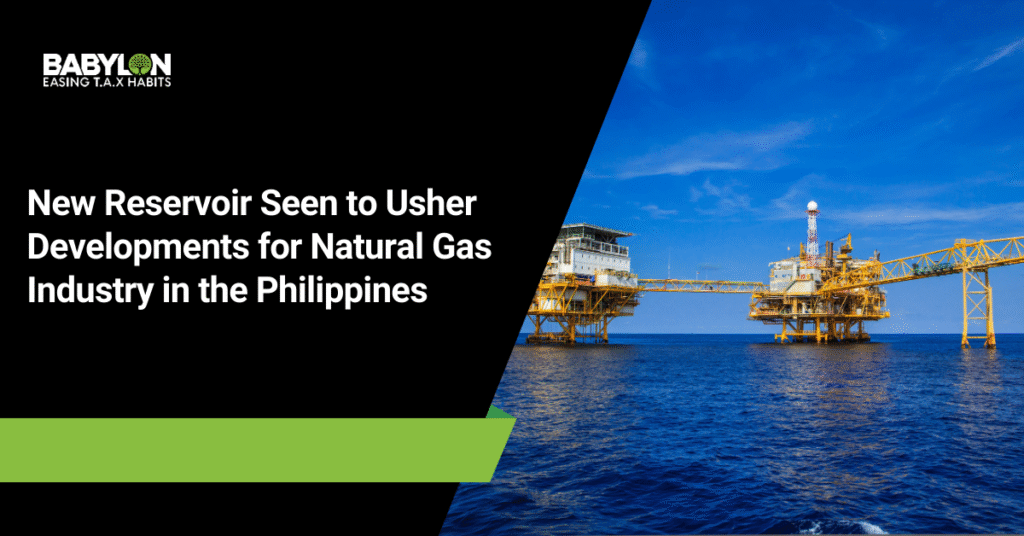
The Department of Energy Philippines reported the discovery of an estimated 98 billion cubic feet of gas in place, equivalent to about 142 Gigawatt hours of electricity at Malampaya East 1 (MAE-1). The MAE-1 discovery provides additional reserve capacity for power plants that depend on Malampaya. As a domestic energy source, it helps stabilize prices […]